Unit 301 No. 6 Xianghong Road,Torch Hi-Tech Zone Industrial Park,Xiang'an District, Xiamen P.R.China
+86-13365922007
[email protected]


If you spend any time observing a busy neurological or orthopedic rehabilitation center, you will quickly notice a glaring operational bottleneck: hand therapy.
Restoring fine motor skills after a stroke, traumatic brain injury, or nerve damage is a painstakingly slow process. Historically, physical and occupational therapists had to sit one-on-one with patients, manually stretching stiff fingers and coaching simple grip exercises. It is physically exhausting for the therapist and financially limiting for the clinic.
This is exactly why the global demand for a smart rehab glove has exploded. By automating repetitive tasks and introducing data-driven biofeedback, a clinical-grade rehab glove allows facilities to treat multiple patients simultaneously while actually improving clinical outcomes.
However, for B2B distributors and hospital procurement teams, the market is currently a minefield. The influx of cheap, toy-like hand massagers masquerading as medical devices makes sourcing difficult. From our perspective as a seasoned manufacturer of smart medical nursing and rehab equipment, we want to pull back the curtain. Let’s explore the true clinical applications of a professional rehab glove and what you need to look for when building your equipment catalog.
Following a neurological event like a stroke, patients often suffer from severe hypertonia or spasticity. Their hand is locked into a tight fist, and simply opening the fingers can be agonizing.
A low-quality device will try to force the hand open with crude mechanical motors, which can easily tear delicate ligaments. A premium rehab glove, on the other hand, utilizes soft robotics—specifically, bionic pneumatic or hydraulic air valves.
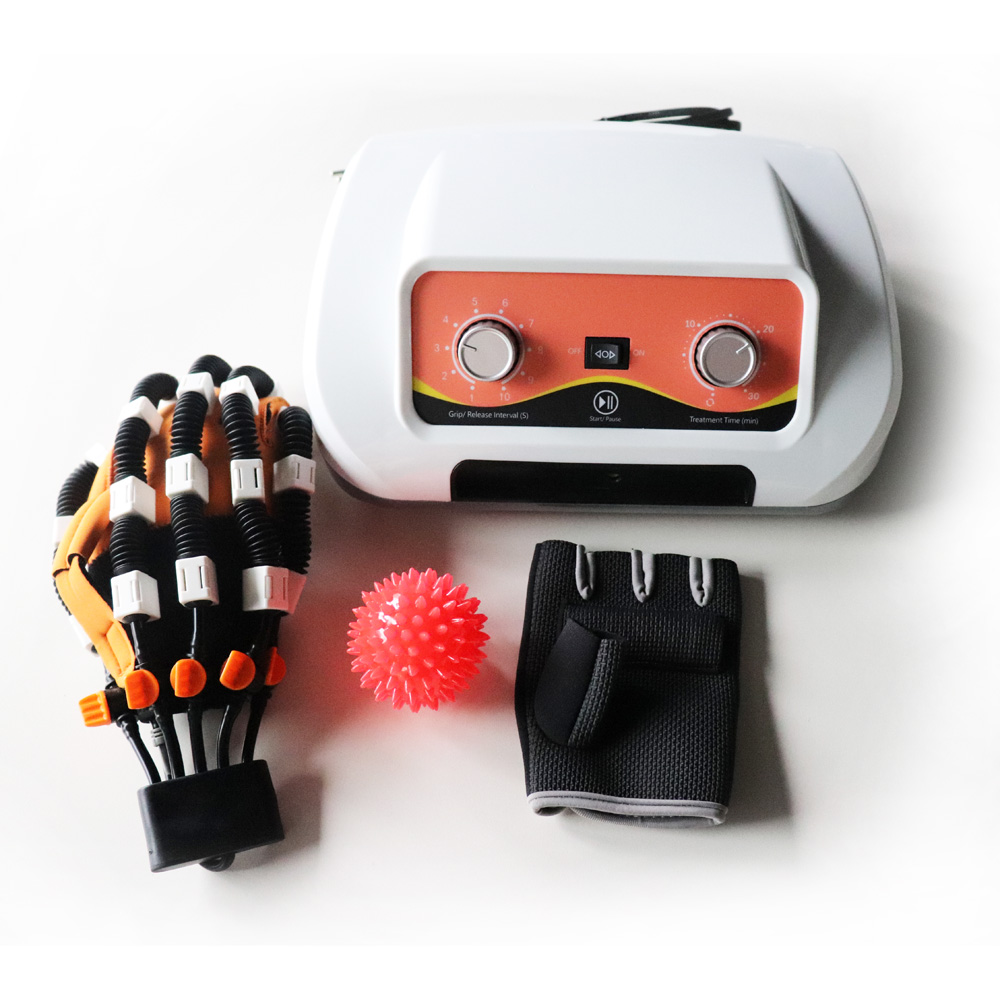
When a clinic applies a rehab glove to a spastic hand, the device uses gentle, highly calibrated air pressure to slowly guide the fingers into extension and flexion. This passive movement therapy is crucial in the early stages of recovery. It prevents joint contractures, maintains muscle length, and promotes blood circulation.
As a distributor, when you demo rehab glove hardware to a clinic director, highlight the pneumatic precision. The ability of the rehab glove to isolate individual fingers (for example, exercising the index and middle finger while keeping the others static) is a hallmark of clinical-grade rehabilitation robot gloves and a major selling point for specialized hand therapy centers.
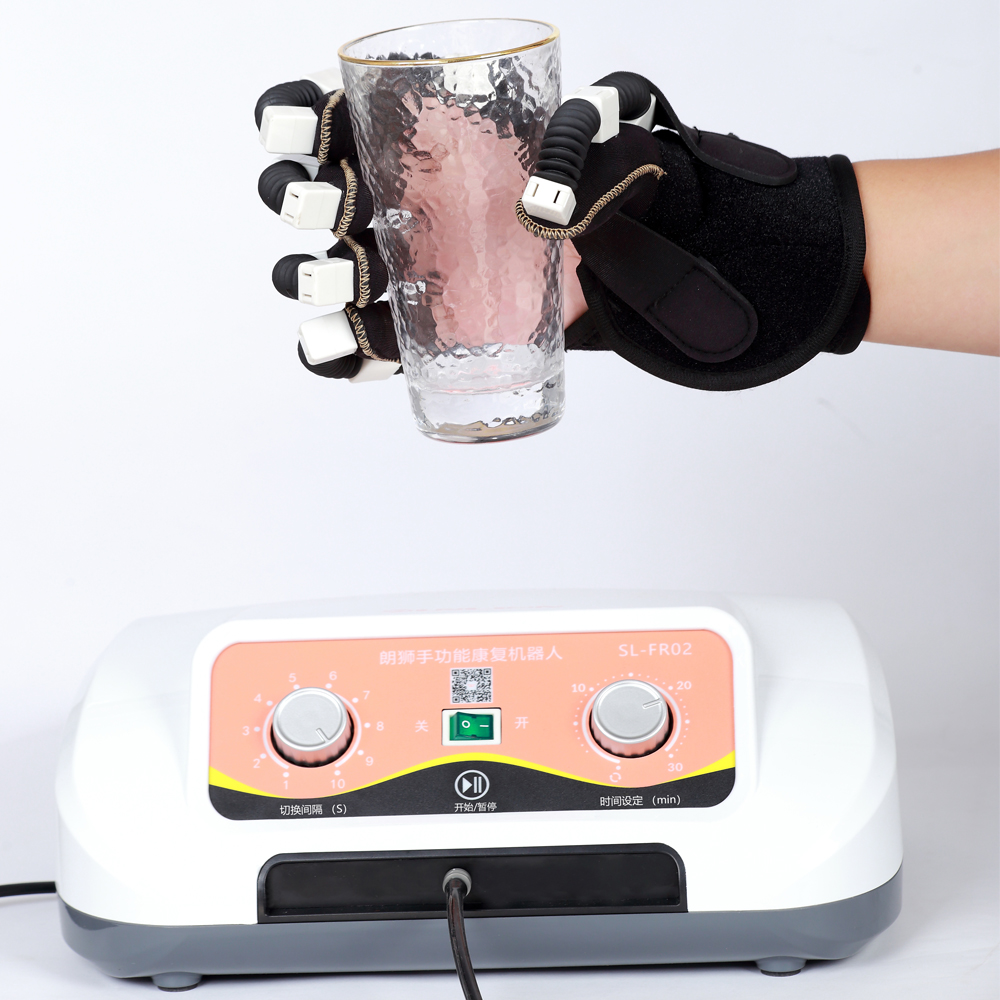
Once a patient regains trace motor control, the focus shifts to Activities of Daily Living (ADLs)—holding a cup of water, turning a doorknob, or gripping a toothbrush. This requires active grip training.
A modern rehab glove features built-in resistive sensors. When the patient attempts to close their hand, the rehab glove detects their voluntary muscle initiation and provides the exact amount of mechanical assistance needed to complete the grip. We call this "assistive mode."
This is where finger rehab gloves prove their true ROI to a clinic. Instead of a therapist holding the patient's hand for 40 minutes, the patient can sit at a station, wearing the rehab glove, and interact with gamified software on a tablet. They might squeeze the rehab glove to catch virtual apples on a screen. This repetition builds muscle memory and dramatically increases patient engagement. They aren't just doing tedious medical exercises; they are playing a game, and the rehab glove is doing the heavy lifting.
Perhaps the most fascinating application we integrate into our production lines is mirror therapy technology. Neuroplasticity—the brain's ability to rewire itself—is the ultimate goal of stroke rehab.
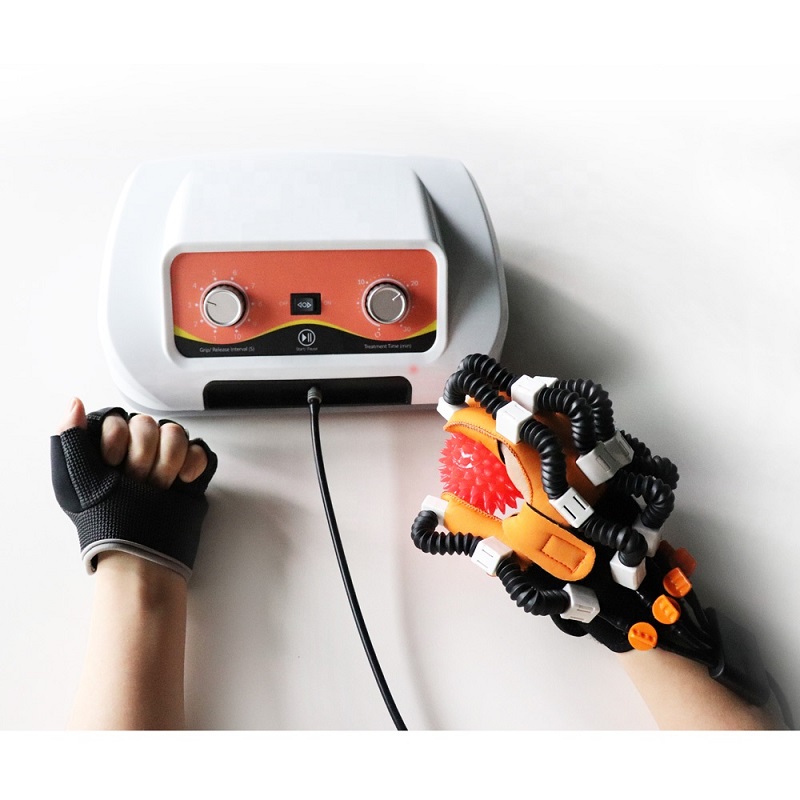
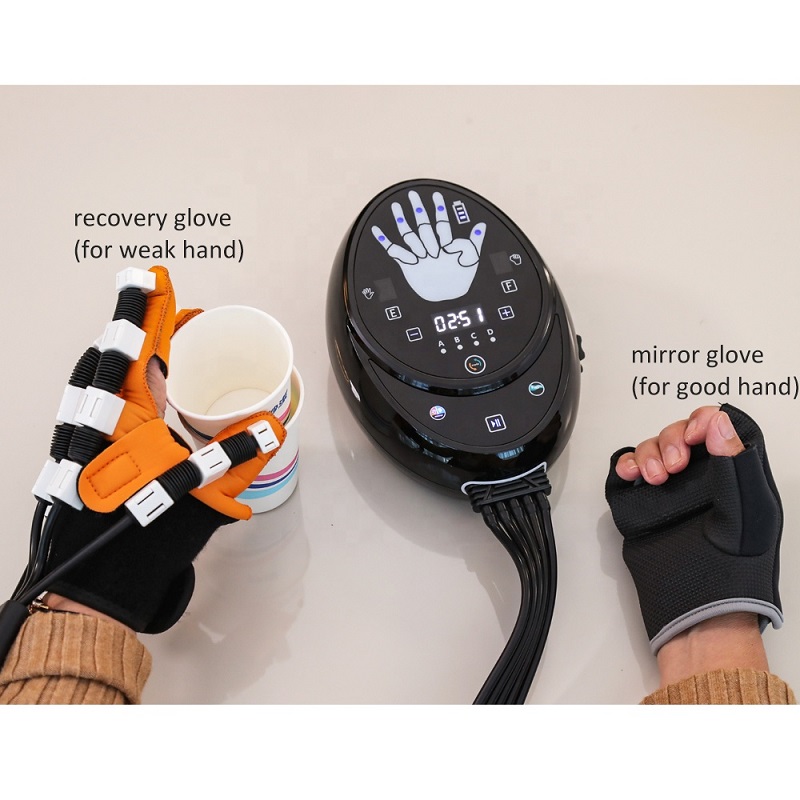
To achieve this, high-end electric hand rehabilitation robot gloves come in pairs. The patient wears a data-glove with tracking sensors on their healthy hand, and the pneumatic rehab glove on their paralyzed hand.
When the patient closes their healthy hand, the system reads the data instantly and commands the rehab glove to close the paralyzed hand simultaneously. This visual and physical synchrony tricks the brain. It fires mirror neurons, essentially teaching the damaged hemisphere of the brain how to control the hand again.
When sourcing hemiplegia finger rehabilitation trainer robot gloves, you must ensure the latency (the delay between the healthy hand moving and the robotic hand reacting) is near zero. In our R&D lab, we optimize microprocessors specifically to eliminate this lag, because a delayed response shatters the neurological illusion and renders mirror therapy useless.
So, how do you avoid sourcing a dud? The difference between a retail gadget and a clinical rehab glove lies in durability and software integration.
In a hospital setting, a rehab glove will be worn by a dozen different patients a day. It will be stretched, sweated on, and subjected to harsh hospital-grade disinfectants.
To help your sales teams position a premium rehab glove against cheaper alternatives, use this baseline comparison matrix:
Specification |
Cheap Consumer "Robotic Glove" |
Premium Clinical Rehab Glove |
Pneumatic Pump |
Noisy, brushed motor (short lifespan) |
Whisper-quiet, continuous-duty brushless compressor |
Finger Isolation |
Moves all fingers together |
Independent valving for each digit |
Biofeedback |
None |
Built-in sensors for active-assist and grip strength tracking |
Material Durability |
Standard nylon (tears easily) |
Biocompatible, high-tensile composite polymers |
Software |
Basic ON/OFF timer |
Data export for clinical EHR, gamified therapy modes |
Let’s be honest: your reputation as a medical distributor rests on equipment uptime. If a clinic buys a batch of rehab glove units from you and the air hoses leak after three weeks, they will never order from you again. This is why we subject every rehab glove that leaves our factory to intense fatigue testing, simulating tens of thousands of grip cycles to guarantee clinical reliability.
The transition from purely manual hand therapy to technology-assisted recovery is not a passing trend; it is the new standard of care. A thoughtfully engineered rehab glove bridges the gap between limited clinical staffing and the high-repetition therapy that patients desperately need to regain their independence.
Whether facilitating gentle passive stretching, powering interactive grip training, or driving neuroplasticity through mirror therapy, the rehab glove is an indispensable asset for modern rehabilitation centers.
Are you looking to upgrade your neurology or orthopedic product lines? Partnering with a manufacturer who understands the deep clinical science behind hand therapy is crucial. Contact our engineering team today to explore OEM/ODM options, request a technical demo, and discover how our advanced robotic systems can drive major revenue growth for your B2B distribution business.
 EN