Unit 301 No. 6 Xianghong Road,Torch Hi-Tech Zone Industrial Park,Xiang'an District, Xiamen P.R.China
+86-13365922007
[email protected]


For decades, the standard medical equipment supply chain was highly predictable. Distributors filled hospital catalogs with passive, low-tech items: aluminum crutches, static plastic splints, and foam positioning wedges. However, as global healthcare shifts toward early hospital discharge and technology-driven home care, passive equipment is no longer enough to win lucrative hospital procurement contracts.
Today, intelligent, active recovery devices are the anchor of any competitive B2B catalog. As a manufacturer producing advanced medical care equipment since 2010, VU has watched this shift firsthand. One of the most significant disruptors in neurological procurement is the integration of advanced hand recovery technology.
In today's market, robot gloves for hand training and rehabilitation supplies represent one of the fastest-growing categories for medical distributors. But how exactly do these high-tech devices fit into a traditional supply program? For B2B procurement teams looking to modernize their offerings, here is a guide on how to seamlessly integrate these tools into your catalog to drive revenue and meet modern clinical demands.
The primary challenge modern hospitals face is the "discharge gap." Stroke survivors often leave the intensive care unit before their neuro-motor functions have fully returned. Hospitals need to send these patients home with equipment that can continue their therapy, but they cannot send a 500-pound clinical machine home with them.
This is where your supply program can step in and solve a major logistical headache.
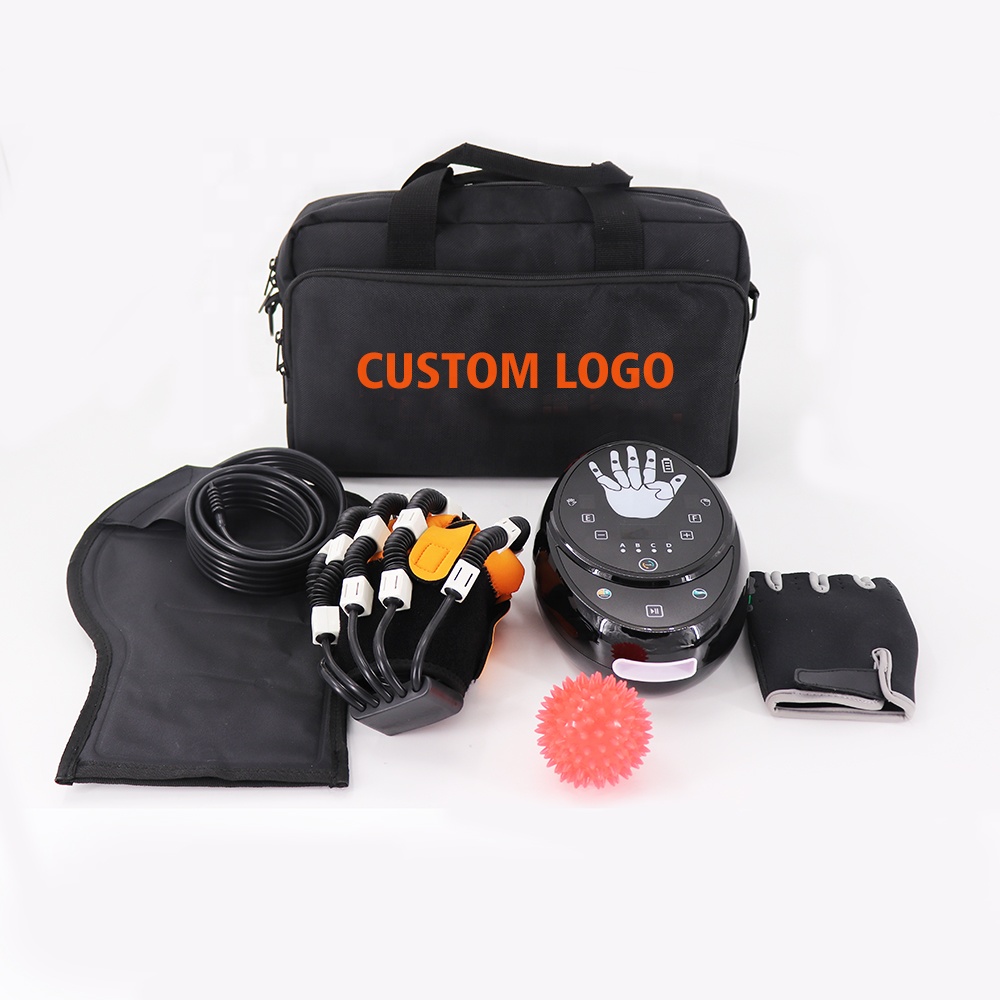
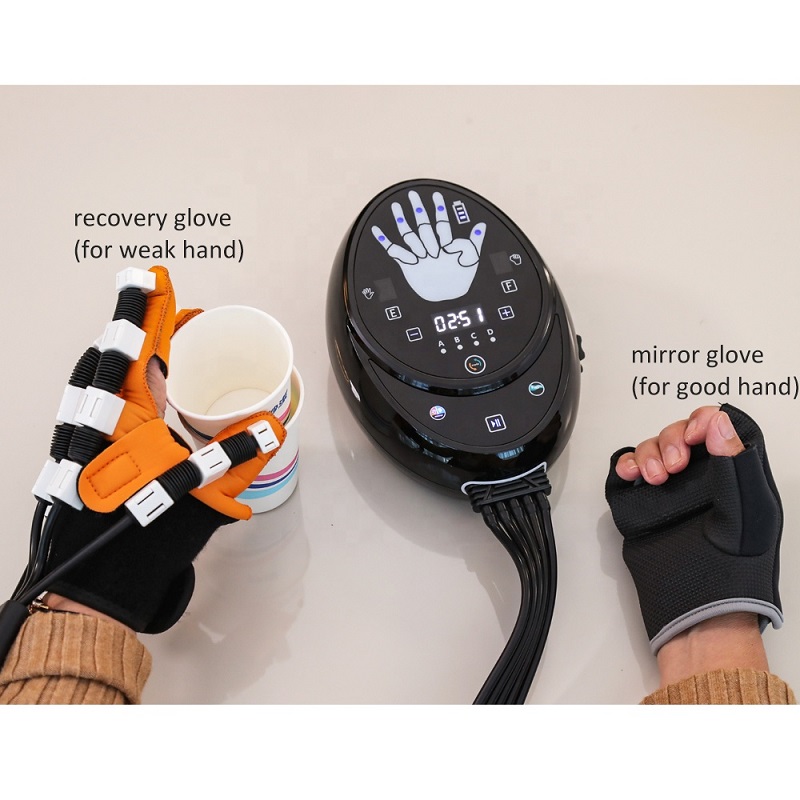
By stocking a portable finger recovery robot machine, distributors provide a direct solution to the discharge gap. These devices are lightweight, require very little warehouse shelf space, and are easily dropshipped directly to a patient’s home or a localized outpatient clinic. Unlike bulky traditional rehab machinery, a hand finger rehabilitation robot is packaged compactly. It allows medical suppliers to offer high-margin, high-tech neurological support without incurring the massive freight and storage costs associated with traditional hospital capital equipment.
When integrating these devices into your existing supply program, it helps to position them as a direct, evolutionary upgrade to products your clients are already buying.
Historically, when a patient suffered from hemiplegia (paralysis of one side of the body), a distributor would sell a static resting hand splint to prevent the fingers from curling into a permanent claw. While the splint prevents contracture, it does zero to promote active brain recovery.
By upgrading your neurological supply tier to include robot gloves for hand training and rehabilitation supplies, you transform a passive purchase into an active recovery investment. You are not just selling plastic and Velcro; you are selling neuroplasticity. This shift in catalog positioning allows B2B sales teams to drastically increase their average order value (AOV) when negotiating with nursing homes and occupational therapy franchises.
As a distributor, your brand reputation hinges on the safety and reliability of the products you supply. When evaluating robot gloves for hand training and rehabilitation supplies for bulk procurement, it is vital to understand the engineering differences in the market to avoid costly product returns.
Many early-generation devices were essentially electric hand rehabilitation robot gloves that relied on rigid, metal motorized joints. From a supply chain perspective, these posed a liability. If a stroke patient experienced a sudden involuntary muscle spasm, rigid electric motors could potentially pinch or strain the delicate finger joints, leading to negative clinic feedback.
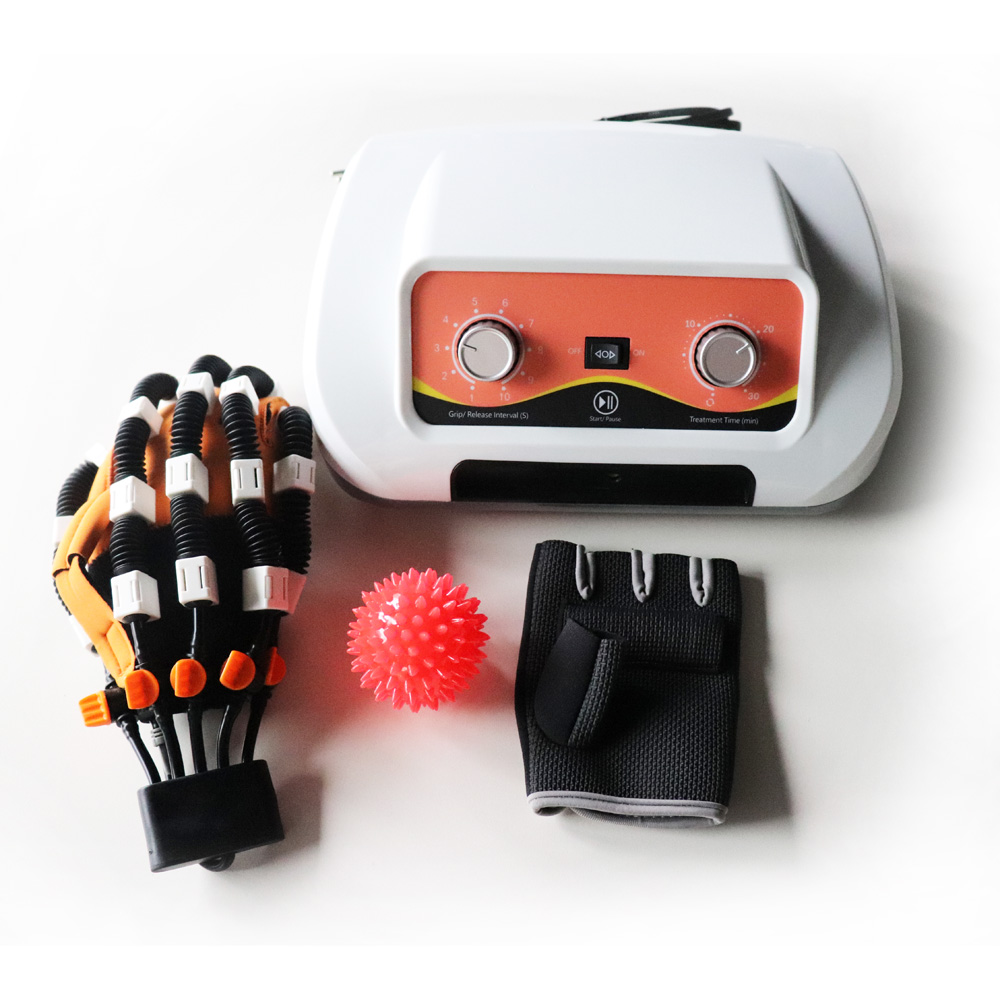
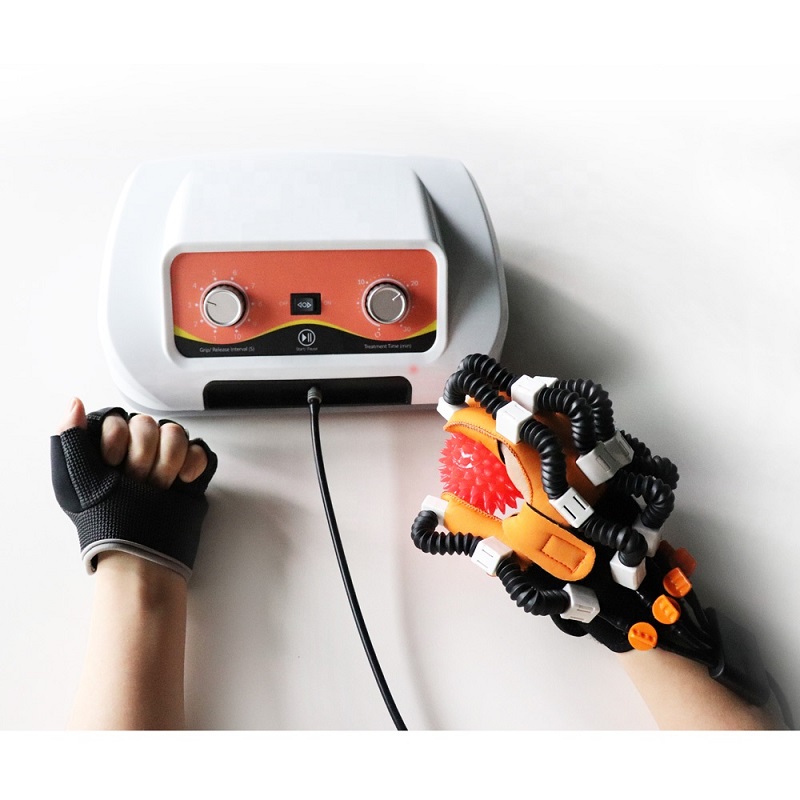
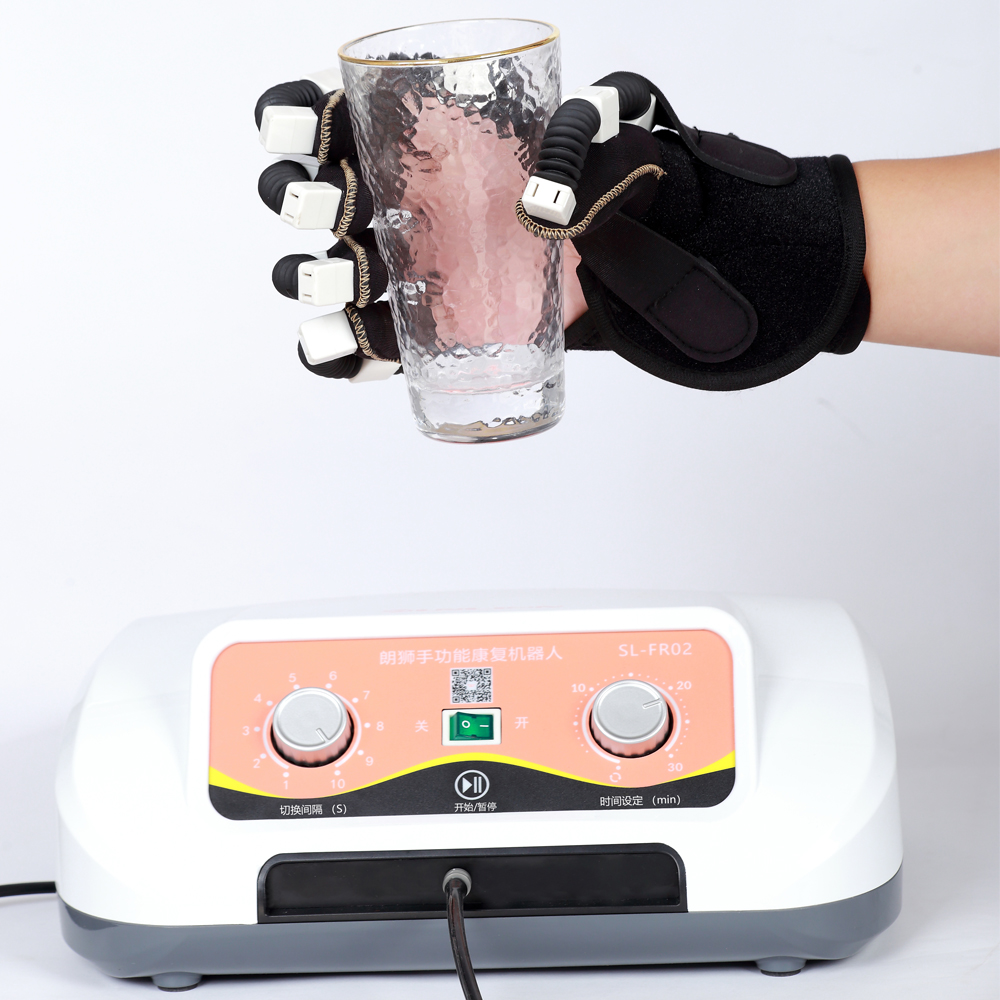
Today, the standard for a modern supply program is soft robotics. When sourcing equipment, B2B buyers should specifically look for a hemiplegia finger rehabilitation trainer robot gloves system that utilizes pneumatic air tubes. Powered by a quiet, tabletop air compressor, these flexible polymer tubes mimic the natural movement of human tendons. If a spasm occurs, the air tubes safely absorb the resistance. Stocking soft-robotic models drastically reduces liability and ensures long-term contract retention with major hospital networks.
To understand the commercial impact of this equipment, consider the strategy of a mid-sized medical distributor we partnered with in Western Europe.
This distributor had been losing outpatient supply contracts because their "Post-Stroke Discharge Kit" only contained basic elastic bands and foam grip balls. Seeking to modernize, they integrated our finger recovery robot machine into their premium tier kits.
They approached local neuro-rehab centers with a new proposition: a complete, lease-to-own discharge kit featuring smart robotic gloves that tracked a patient's daily flexion repetitions via software. The data was a game-changer for the clinics, allowing therapists to monitor home compliance remotely. Within eight months, the distributor saw a 34% increase in institutional contract renewals, completely revitalizing their neurological supply division.
For B2B program managers looking to source these devices, use this matrix to differentiate between low-tier consumer gadgets and clinical-grade equipment fit for a professional supply chain:
Feature Focus |
Consumer Retail Grade |
B2B Clinical Supply Standard |
Impact on Supply Program |
Actuation Mechanism |
Rigid electric wires |
Soft pneumatic polymer tubes |
Lowers liability; safe for high-spasticity patients. |
Material Hygiene |
Basic cloth fabric |
Wipeable, medical-grade materials |
Meets hospital infection control standards for multi-patient use. |
Training Modes |
Single automatic flexion |
Mirror therapy, active assist, isolation |
Broadens the addressable market to all stages of stroke recovery. |
Packaging footprint |
Bulky, non-stackable |
Compact, modular carrying cases |
Reduces warehouse storage footprint and shipping freight costs. |
The medical supply industry is no longer about just moving boxes of passive consumables; it is about providing intelligent clinical solutions. Hospital administrators and therapy directors are actively seeking vendors who can provide smart, data-driven, and patient-friendly tools.
Ultimately, robot gloves for hand training and rehabilitation supplies are more than just a niche category. They are a highly profitable, scalable bridge between intensive hospital care and independent home rehabilitation. By partnering with a seasoned manufacturer to secure reliable, soft-robotic hand trainers, your B2B supply program will not only meet the current demands of modern neurology but will lead the market into the future of automated recovery.
 EN